-
1 Introduction
You can skip this section if you do not plan on completing the full Foundation Certificate in Nail Technology
-
2 Client Consultations
- VIDEO LESSON – Client Consultations
- PODCAST EPISODE – Client Consultations
- 2.1 Consultations = Customer Service
- 2.2 When the Client Arrives
- 2.3 Making Recommendations
- 2.4 Other Information to Gather
- 2.5 Client Consultation Notes: The Before, During, and After
- 2.6 Summing It Up
- 2.7 Sample Client Card
- 2.8 Consultations Activity (Optional)
- 2.9 We Don’t Believe in Homework But… (Part 1)
-
3 Sanitisation and Safety
- VIDEO LESSON – Sanitisation and Safety
- PODCAST EPISODE – Sanitisation and Safety
- 3.1 Introduction to Basic Salon Sanitisation
- 3.2 When a Client Arrives (Wall Print Out)
- 3.3 Sanitisation and Disinfection of Tools and Implements
- 3.4 Correct Methods of Disinfection
- 3.5 When a Client Leaves (Wall Print Out)
- 3.6 Individual Client Packs
- 3.7 Added Responsibilities for Pedicure Equipment
- 3.8 Added Responsibilities for Blood and Bodily Fluids
- 3.9 Blood Spill (Wall Print Out)
- 3.10 Safe Use of Reusable Products
- 3.11 The Importance of Ventilation
- 3.12 First Aid
- 3.13 Ergonomics
- 3.14 Ergonomics Activity
- 3.15 Educating Clients
- 3.16 Self Evaluation (Print Out)
- 3.17 We Don’t Believe in Homework But… (Part 2)
-
4 Nail Anatomy and Disorders
- VIDEO LESSON Nail Anatomy
- 4.1 Introduction
- 4.2 Basic Nail Anatomy
- 4.3 Self Evaluation
- VIDEO LESSON – Disorders
- PODCAST EPISODE – Nail Anatomy and Disorders
- 4.5 Nail Disorders
- 4.6 Nail Pitting
- 4.7 Terry’s Nails
- 4.8 Beau’s Lines
- 4.9 Onycholysis
- 4.10 Yellow Nail Syndrome
- 4.11 Nail Clubbing
- 4.12 Koilonychia (Spoon Nails)
- 4.13 Paronychia
- 4.14 Onychomycosis (Nail Fungus)
- 4.15 Pseudomonas (Greenies)
- 4.16 Dermatophytes
- 4.17 Melanonychia
- 4.18 Nail Disorders Activity
- 4.19 Nail Disorders Quiz (Optional)
- 4.20 Nail Troubleshooting
- 4.21 Nail Troubleshooting Activity (Printable)
- 4.23 We Don’t Believe in Homework But… (Part 3)
-
Biohazards
- VIDEO LESSON Biohazards
- PODCAST EPISODE – Biohazards
- 5.1 What is a Biohazard?
- 5.2 The Risks
- 5.3 Steps to Prevent Exposure
- 5.4 What Should I Do If I Am Exposed To Bodily Fluids?
- 5.5 Biohazards Research Activity – PDF
- 5.6 Biohazards Quiz (Optional)
- 5.7 Blood Spill Drill
- 5.8 Blood Spill Drill Answers
- 5.9 We Don’t Believe in Homework But… (Part 4)
-
Chemical Hazards
- VIDEO LESSON – Chemical Hazards
- 6.1 Chemical Hazards
- 6.2 How To Reduce Exposure Due To Inhalation
- 6.3 How To Reduce Skin Exposure
- 6.4 Reduce The Risk Of Accidental Swallowing
- 6.5 The Risks of Exposure to Chemicals Via the Nail Plate
- 6.6 Checklist for Salons
- 6.7 Checklist for Employees
- VIDEO LESSON – Ingredients
- 6.8 Potential Symptoms and Health Effects of Overexposure
- 6.9 Understanding “Free” Labels in Nail Products: The Truth Behind the Buzzwords
- 6.10 Methyl Methacrylate (MMA)
- 6.11 Vegan Products
- 6.12 Dragon’s Den UK Highlight the Difference Marketing Makes
- 6.13 SDS Sheets
- 6.14 Artistic Nail Design and Be Creative MSDS Sheets
- 6.15 MSDS Activity
- 6.16 Chemical Hazards Quiz (Optional)
- 6.17 We Don’t Believe in Homework But… (Part 5)
-
UV Light
- VIDEO LESSON – UV Light
- 7.1 What is UV Light?
- 7.2 The Difference between LED and UV Lamps
- 7.3 How Long Do Bulbs and Lamps Last
- 7.4 UVB vs UVA and Safety
- 7.5 UV vs LED Products
- 7.6 Pop Quiz – The Ice Cream Version
- 7.7 Pop Quiz – The Assessment Version
- 7.8 The Dangers of Improper Curing
- 7.9 The Complexity of UV Curing by Doug Schoon
- 7.10 Do UV Lights Cause Cancer?
- 7.11 How Can We Increase Client Peace of Mind?
- 7.12 “Do UV Nail Lamps Emit Unsafe Levels of Ultraviolet Light?” – A Study
- 7.13 UV Quiz (Optional)
- 7.14 We Don’t Believe in Homework But… (Part 6)
-
Chemistry
- VIDEO LESSON – Acrylates
- 8.1 Plastics
- 8.2 Monomers
- 8.3 Polymerisation/Curing
- 8.4 Cross-Linking Monomers
- 8.5 Shrinkage
- VIDEO LESSON – Cyanoacrylates
- 8.6 Cyanoacrylates
- 8.7 Shock Curing
- VIDEO LESSON – Oligomers
- 8.8 Oligomers
- 8.9 Exothermic Reactions
- VIDEO LESSON – Polymers
- 8.10 Polymers
- 8.11 Liquid and Powder Ingredients Reference
- 8.12 Mix Ratios
- VIDEO LESSON – The Lifecycle of an Acrylate
- 8.13 Acrylate Characteristics
- 8.14 Adhesion
- 8.15 Wetting Agents
- 8.16 Flexibility
- 8.17 Strength
- 8.18 Removal
- 8.19 Choosing the Right Service for Your Client – Cheat Sheet
- 8.20 The Difference Between Artistic and Everyone Else
- 8.21 Wrapping It All Up
- 8.22 We Don’t Believe in Homework But… (Part 7)
-
Bonuses
-
Assessment
-
Finished!
7.10 Do UV Lights Cause Cancer?
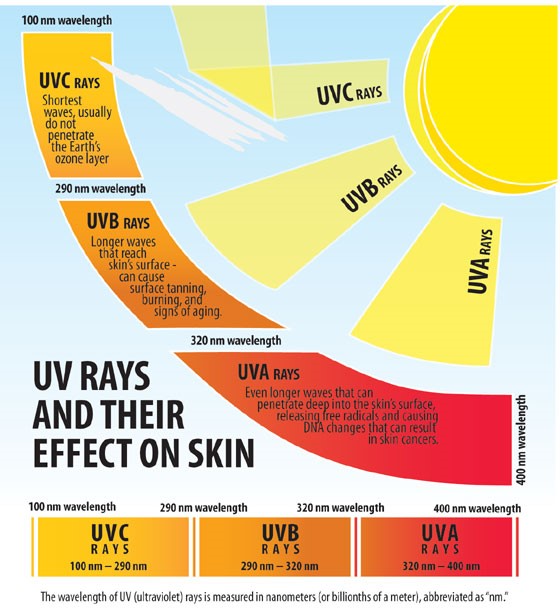
There are always a lot of rumours going around about UV lamps being dangerous, with some suggesting they could cause skin cancer.
However, let’s dive into the facts before jumping to conclusions.
🔍 The Truth About UV Lamps and Skin Cancer
Many reputable scientific studies have shown that UV lamps used in nail salons do not cause skin cancer. Here’s what the evidence tells us:
- UVB exposure from UV lamps is equal to what you’d get from spending just 17-26 extra seconds in the sun each day, during the two weeks between nail appointments.
- This level of exposure is considered safe and does not pose a cancer risk.
An independent study by Lighting Science, alongside experts such as Doug Schoon (CND) and Paul Bryson (OPI), tested UV lamps from multiple brands and found that the UV light emitted by nail lamps is much lower than sun exposure or tanning beds.
🚗 More UV Exposure While Driving Than from a Gel Manicure
It’s actually true that clients’ hands are likely to be exposed to more UV light while driving than they would be during a typical gel manicure. In other words, the exposure you get from UV nail lamps is incredibly low compared to other everyday activities.
🧴 How Much UV Does a Nail Lamp Really Emit?
A lot of these rumours started when two Texas-based dermatologists released a report that claimed lamps are a source of ‘high-dose UVA’, inaccurately comparing UV tanning beds with UV nail lamps.
Lighting Science tested several UV nail lamps and compared their UV emission to natural sunlight.
They concluded that the dermatologists’ report (‘Occurrence of Nonmelanoma Skin Cancers on the Hands After UV Nail Light Exposure’) overestimated the exposure of client skin to UV light from nail lamps and improperly characterised the effect of these lamps on the hand.
The UV nail lamps selected for testing were representative of more than 90% of the nail lamps used in salons. Highly sensitive UV detectors were placed where client hands would normally reside while inside a lamp. These detectors measured the amount of UVA and UVB light emitted from each lamp. To ensure a proper comparison, Lighting Science also used the same test equipment to measure the UVA and UVB light found in sunlight.
Here’s what they found:
- UVB output from all tested nail lamps was less than natural sunlight. This makes sense because UV lamps have filters inside their bulbs that remove almost all UVB.
- UVA exposure is much lower than suggested in the dermatologists’ report. UVA exposure is equivalent to spending an extra 1.5 to 2.7 minutes in the sun each day between appointments, depending on the type of UV lamp used. A two-bulb lamp corresponds to 1.5 minutes in the sun, and a four-bulb lamp corresponds to 2.7 minutes.
This shows that UV lamps emit a relatively low level of UV light, which is considered safe when used for nail services.
“Our testing shows that UV nail lamps emit relatively low levels of UV light, and these exposure levels are considered well within safe levels when they are used to perform UV artificial nail services in nail salons,” write Schoon, Bryson, and McConnell. The report by the Texas dermatologists, they say, has a faulty conclusion because it is based on incorrect assumptions.
In a completely separate study, “Photobiological Safety Evaluation of UV Nail Lamps” (published in the Spring 2013 issue of Photochemistry and Photobiology, and co-authored by Robert Sayre, co-inventor of the SPF rating system for sunscreens) it was found that:
-
A person could put their hands under a nail lamp for 25 minutes a day without exceeding the internationally accepted safe limits for daily workplace UV exposure.
The paper cited important research demonstrating that the natural nail plate is a very efficient blocker of UV, protecting the nail bed. “The UV exposure risks to the nail bed are comparable to that of skin protected by high SPF topical sunscreen.”
The researchers also concluded that:
- The risk of developing non-melanoma skin cancer was 11 to 46 times lower than the risks of being exposed to natural sunlight.
- The data showed that UV nail lamps were safer than both natural sunlight and sunlamps. In a direct quote from the paper: “All of the various UV nail lamps submitted for evaluation were found to be significantly less hazardous than might have been anticipated based on the initial concerns raised.”
This was the first study to adhere to the official internationally accepted standard for UV source testing (ANSI RP-27), which is determined to be the superior method for evaluating UV nail units.
🌞 Our Nails Naturally Block UV Light
Here’s something interesting: nails act as natural UV protectors. Research shows that the natural nail plate has a high level of resistance to UV light, providing protection to the nail bed.
- The UV resistance of the nail plate is comparable to SPF 40 sunscreen.
- The back of the hand is 4 times more resistant to UV than the forehead and cheek, and 3.5 times more resistant than a person’s back, making the backside of the hand the most UV-resistant part of the body – “The dorsum [backside] of the hand is the most UV acclimatized, photo-adapted, and UV-resistant body site.”
🔬 UV Exposure: Nail Lamps vs. Medical UV Devices
A third study reinforces what we have already learnt. Authors Alina Markova of Massachusetts General Hospital, the Alpert Medical School of Brown University, and the Veterans Affairs Medical Center, and Martin Weinstock of the Alpert Medical School of Brown University and the Veterans Affairs Medical Center published a study in the Journal of Investigative Dermatology.
They determined that the narrowband UVB (NB-UVB) used for phototherapy, which is a common dermatological treatment, is “viewed as low risk, although not as zero risk, for the development of keratinocyte carcinoma.”
The authors concluded that nail lamps primarily emitted UVA with no detectable UVB or UVC, and that “such exposure is a tiny fraction of a single NB-UVB course, and hence does not produce a clinically significant increased risk of developing skin cancer.” Markova and Weinstock further say that “dermatologists and primary-care physicians may reassure patients regarding the safety of these devices.”
Doctors often use UV medical lamps as a therapeutic/dermatological skin treatment, and such treatments are considered safe. When this study compared these medical devices to UV nail lamp output, the authors stated that you would need to have over 250 years of weekly UV nail sessions to experience the same risk exposure as a single medical UV treatment.
We should always remember that our bodies are designed to be exposed to varying wavelengths of light, including UVA and some low levels of UVB light. Our body is also designed to repair itself upon overexposure conditions.
It is equally important to understand that, as in every other aspect of our lives, we should always use the equipment we have at work and at home in the manner it was designed to be used.
🛑 Who Should Be Cautious with UV Lamps?
While UV nail lamps are safe for most people, there are certain individuals who should be cautious:
-
Clients who are taking medications that make their skin more sensitive to UV light (such as some chemotherapy drugs) should avoid UV exposure or take proper precautions.
🧳 Key Takeaways
- UV nail lamps are safe when used as directed by manufacturers.
- UVB exposure from these lamps is minimal and equivalent to spending 17-26 extra seconds in the sun per day.
- UVA exposure from UV lamps is much lower than dermatologists initially suggested.
- Your nail plate naturally blocks UV, providing added protection to your skin.
- UV lamps emit less UV than both natural sunlight and sun lamps.
- The main real risk is from incorrect bulb use (UVB or UVC bulbs), which can increase UV exposure and cause improper curing of gel.
🛠 Real Risks Associated with UV Lamps
Just because UV lamps don’t cause cancer doesn’t mean they’re without risk. Here’s what you need to know:
- Medication: Clients on medications that make them sensitive to UV should take extra caution and seek the advice of their doctor before going ahead with a nail appointment.
- Wrong Bulbs: Using UVB or UVC bulbs in your UV lamp can cause skin damage and improper curing of gels. Always replace bulbs with the same type supplied by the lamp manufacturer.
- Improper Gel Curing: Using the wrong bulb can lead to improper curing of the gel, affecting its strength and durability.
Pop Quiz!
1. What is the main reason some people believe UV lamps could cause skin cancer?
- A) Misconceptions about UV light exposure from tanning beds
- B) UV lamps emit too much UVA light
- C) UV lamps emit too much UVB light
- D) UV lamps are similar to sun exposure
2. How much additional UV exposure does a client get from UV lamps during a gel manicure?
- A) The equivalent of 17-26 seconds of extra sun exposure per day
- B) The equivalent of 1-2 minutes of extra sun exposure per day
- C) The equivalent of 5-10 minutes of extra sun exposure per day
- D) The equivalent of no extra sun exposure
3. How do UV lamps compare to natural sunlight in terms of UVB exposure?
- A) UV lamps emit more UVB than sunlight
- B) UVB exposure from UV lamps is equal to sunlight
- C) UVB output from UV lamps is less than sunlight
- D) UV lamps emit no UVB at all
4. What did Lighting Science’s study conclude about the safety of UV lamps?
- A) UV lamps emit a dangerously high level of UV light
- B) UV lamps are safe for use in nail salons, emitting low levels of UV light
- C) UV lamps should be avoided at all costs
- D) The study showed UV lamps emit the same level of UV as sunlight
5. How long could a person safely have their hands under a nail lamp every day without exceeding safe UV exposure limits?
- A) 5 minutes
- B) 25 minutes
- C) 1 hour
- D) 5 hours
6. How does the natural nail plate protect the nail bed from UV exposure?
- A) The nail plate provides no protection against UV light
- B) The nail plate blocks UV light, similar to SPF 40 sunscreen
- C) The nail plate attracts UV light, increasing exposure
- D) The nail plate only protects from UVA light
7. Which part of the body is the most UV-resistant?
- A) The back of the hand
- B) The forehead
- C) The back
- D) The nose
8. What’s the main conclusion of the study comparing UV nail lamps and medical UV devices?
- A) UV nail lamps emit more UV light than medical devices
- B) You would need 250 years of weekly UV nail sessions to match the risk of a single medical UV treatment
- C) UV nail lamps are much more harmful than medical devices
- D) Medical UV treatments are risk-free
9. Who should be cautious when using UV lamps?
- A) Everyone should be cautious
- B) Only those with fair skin
- C) Clients on medications that increase sensitivity to UV light
- D) People with freckles
Answers
- A) Misconceptions about UV light exposure from tanning beds
- A) 17-26 seconds of extra sun exposure per day
- C) UVB output from UV lamps is less than sunlight
- B) UV lamps are safe for use in nail salons, emitting low levels of UV light
- B) 25 minutes
- B) The nail plate blocks UV light, similar to SPF 40 sunscreen
- A) The back of the hand
- B) You would need 250 years of weekly UV nail sessions to match the risk of a single medical UV treatment
- C) Clients on medications that increase sensitivity to UV light